Measuring Traction the Same Way We Measure Randomness
At RANDAO, we don’t trust hand-wavy claims — not in cryptography, and not in go-to-market strategy.
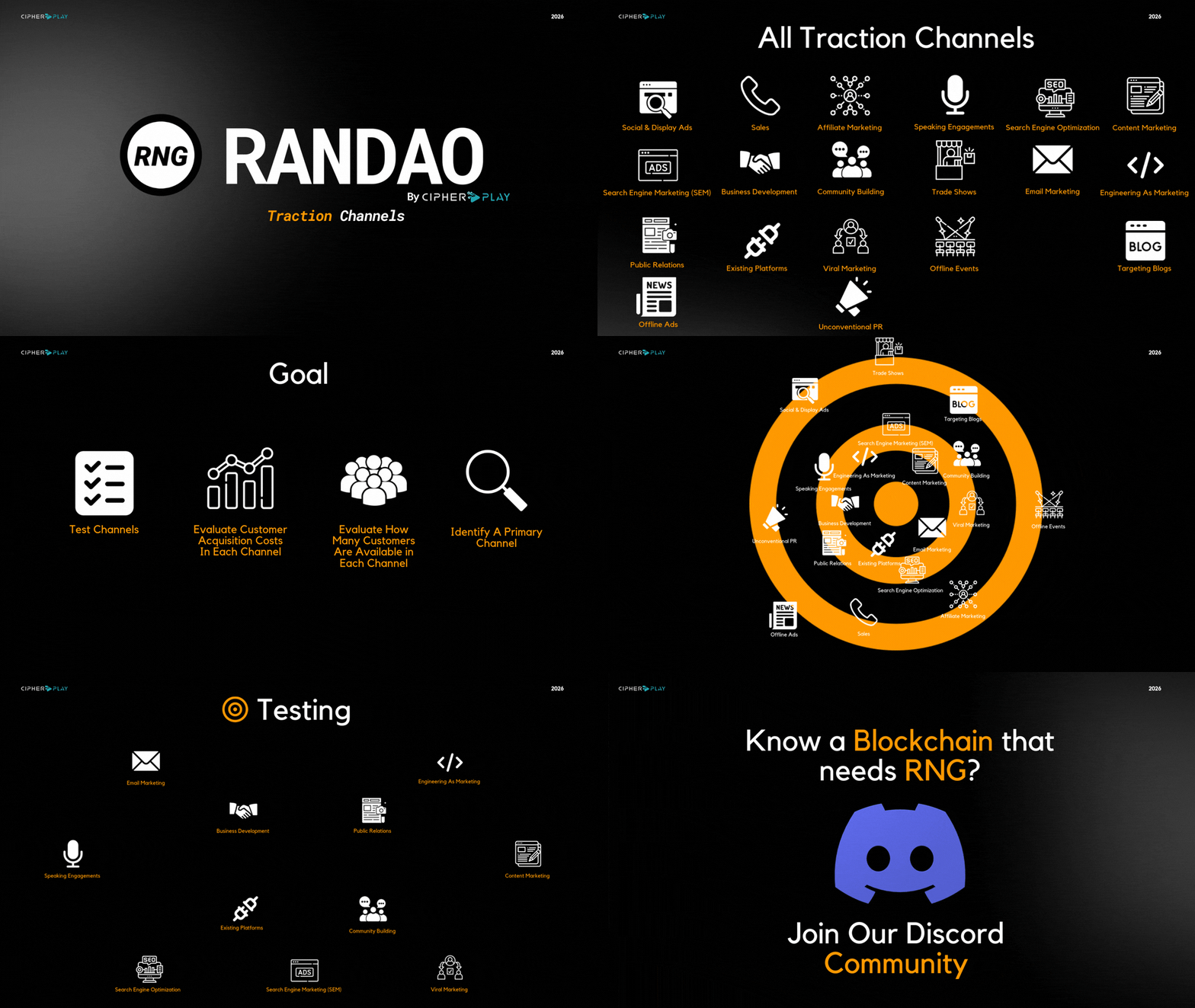
So instead of debating which traction channel should work, we’re running controlled experiments to learn which ones actually do.
Just like onchain randomness, traction only matters if it’s verifiable.
The 11 Traction Channels We’re Actively Testing
All of the following are in the running — none are assumed winners.
Existing Platforms
Meeting builders where they already ship, deploy, and decide.
Search Engine Marketing (SEM)
Capturing explicit intent from teams actively looking for blockchain RNG solutions.
Engineering as Marketing
Letting code, docs, benchmarks, and open research do the talking.
Content Marketing
Explaining complex systems simply — especially around verifiable randomness and trust.
Viral Marketing
Designing ideas that move because they’re worth sharing, not because they’re forced.
Business Development
Direct conversations with foundations, labs, and protocol teams.
Public Relations
Strategic credibility signals when the timing actually matters.
Search Engine Optimization (SEO)
Owning the long-term surface area for onchain randomness and blockchain RNG.
Community Building
Builders learning from builders. Trust forming before transactions.
Speaking Engagements
Compressing months of trust-building into a single room.
Email Marketing
Direct, opt-in communication with people who already care.
What This Means Going Forward
We’ll double down on what proves itself.
We’ll cut what doesn’t.
And we’ll publish what we learn along the way.
Because traction, like randomness, should be auditable.
Join the Experiment
If you believe community building is the strongest long-term traction channel for crypto infrastructure, join us.
Builders, researchers, and protocol teams are already shaping these conversations.
👉 Join the Discord:
